
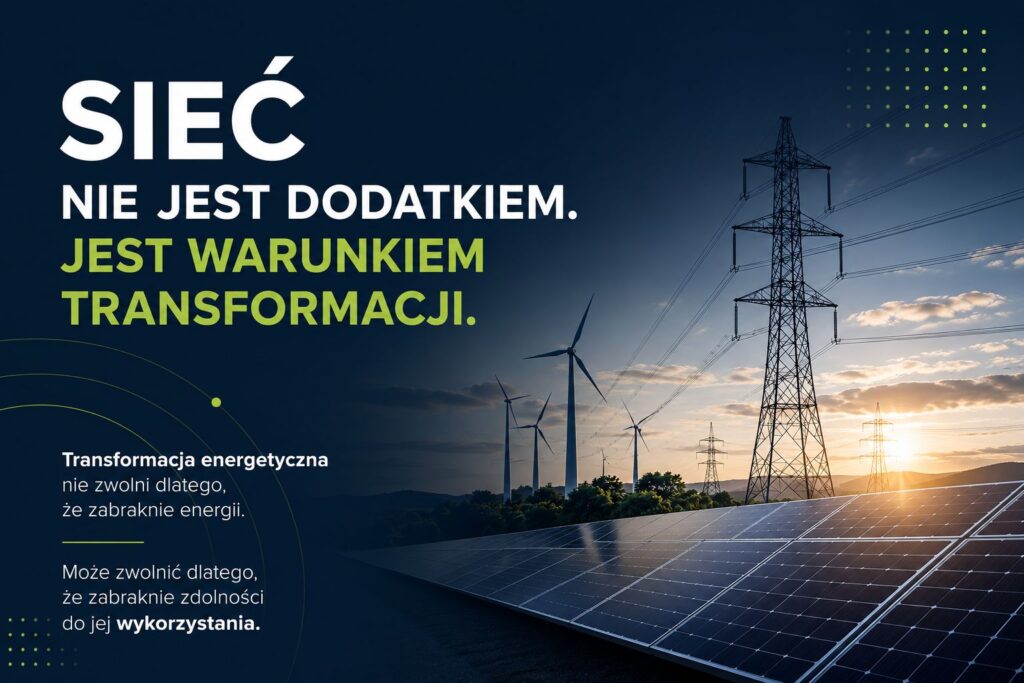
42.4 GW of Renewable Energy Projects Unable to Connect to the Grid
The success of the energy transition depends not only on the rapid deployment of renewable energy sources but also on the ability of power systems to integrate them efficiently. Grid infrastructure has become one of the key factors determining the pace and effectiveness of the transition.
According to the Polish Energy Regulatory Office (URE), connection conditions for renewable energy projects with a combined capacity of 42.4 GW were refused in 2024. In total, 6,259 refusals were issued for renewable energy projects.
URE emphasizes that this figure should not be interpreted as 42.4 GW of ready-to-build projects awaiting connection. Some developers submitted multiple applications for the same or similar projects, meaning the reported capacity does not directly reflect the actual investment pipeline. Nevertheless, the scale of the refusals clearly highlights the growing pressure on electricity networks and the need for further infrastructure development.
A Global Challenge
Grid capacity constraints are not unique to Poland.
The International Energy Agency (IEA) estimates that more than 2,500 GW of projects—including renewable generation, battery energy storage systems, and new electricity demand—are currently waiting for grid connection worldwide. This demonstrates that expanding and modernizing electricity networks has become a global priority for achieving climate and energy objectives.
Investing in Grid Infrastructure
Poland has already launched an ambitious investment program to strengthen its transmission network.
The Polish Transmission Network Development Plan 2025–2034, prepared by the Polish Transmission System Operator (PSE), foresees investments exceeding PLN 64 billion. The program includes approximately 4,700 km of new 400 kV transmission lines, the construction of 28 new substations, and the modernization of 110 existing substations.
These investments are intended to increase the grid’s capacity to connect renewable energy sources, energy storage facilities, and new consumers while enhancing the reliability and resilience of the national power system.
Grid Expansion Alone Is Not Enough
Infrastructure development should be accompanied by technologies that increase system flexibility. Among the most important are:
- Energy storage systems,
- Demand-side flexibility,
- Local energy balancing,
- Digital energy management solutions,
- Smart technologies supporting grid operation and energy market participants.
According to the IEA, digitalization, energy storage, and active demand-side management can significantly improve the utilization of existing infrastructure and facilitate the integration of distributed energy resources. While these solutions cannot replace grid investments, they play a crucial complementary role in building a more resilient energy system.

Building the Energy System of the Future
At R&DC Future Solutions, we believe that the energy transition requires the simultaneous development of grid infrastructure, flexible energy solutions, and advanced digital technologies that improve energy management and system efficiency.
Ultimately, the success of the energy transition will not be measured solely by the number of newly installed renewable megawatts, but by the ability of the power system to integrate them safely, efficiently, and sustainably.
Sources
- Polish Energy Regulatory Office (URE) – Annual Activity Report 2024
- Polish Power Grid (PSE) – Transmission Network Development Plan 2025–2034 and publications on renewable energy redispatch
- International Energy Agency (IEA) – Electricity 2026 and reports on electricity grids and system flexibility