
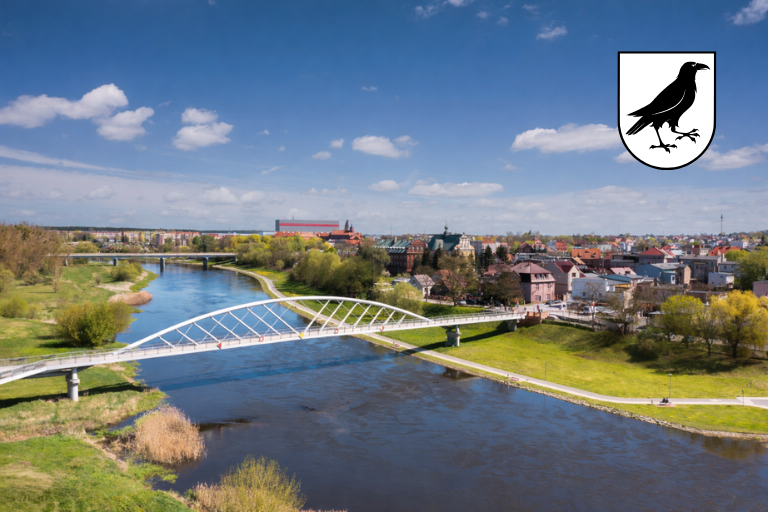
Wronki Energy Cluster — the beginning of local energy cooperation
The Wronki Energy Cluster is a new strategic initiative aimed at launching a cooperation process between the local government, key stakeholders, and technological partners to develop a local energy market. The project is currently at its initial stage and focuses on analytical and conceptual activities intended to assess the feasibility, potential, and possible development paths of an energy cluster tailored to the specific characteristics of Wronki.
Wronki is a city with a strong industrial base, a stable economic structure, and well-developed technical infrastructure, located in the western part of the Greater Poland Voivodeship, along the Warta River. The presence of major industrial facilities, municipal infrastructure, and compact urban development results in diversified yet predictable energy demand, creating favorable conditions for local energy balancing models and the development of distributed energy systems.
The objective of the undertaken activities is to examine how local energy sources, improved energy efficiency, and modern energy management tools can support the city’s energy security, stabilize energy costs, and foster long-term economic development. The initiation of work on the energy cluster does not predetermine its final structure or the technologies to be applied — it represents a phase of open dialogue, analysis, and responsible design of solutions aligned with local conditions and needs.
The next stages of the project are expected to include:
- analysis of Wronki’s local energy and infrastructure potential,
- identification of opportunities for the development of renewable energy sources and energy storage solutions,
- development of the conceptual framework for the Wronki Energy Cluster,
- support for the local government in decision-making and planning processes,
- dialogue with local businesses, institutions, and the community.
The Wronki Energy Cluster forms part of a broader portfolio of cluster initiatives being developed across different regions of the country and serves as an example of a responsible, phased approach to planning the energy transition — based on data, local potential, and partnership-driven cooperation.